
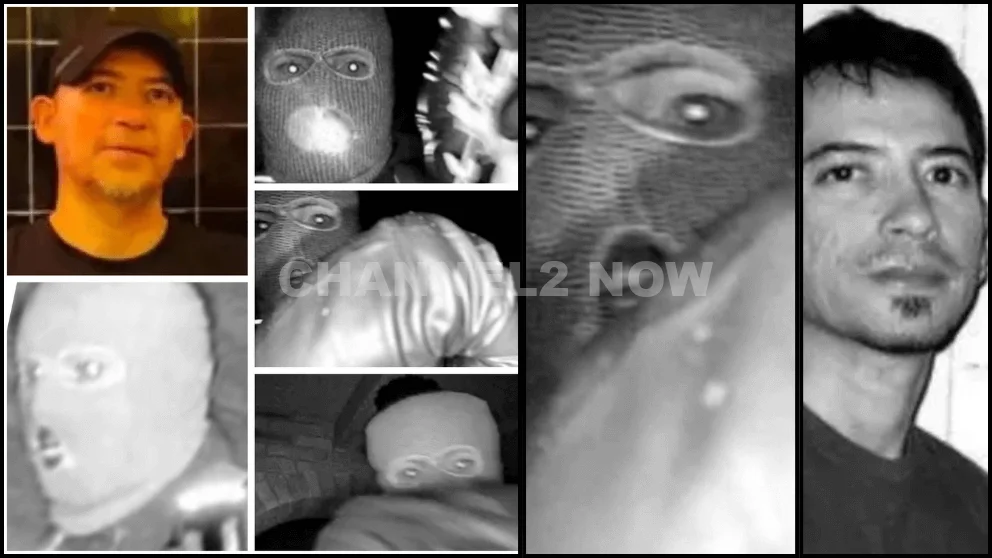
In the days following the release of new FBI images and video clips connected to the disappearance of 84‑year‑old Nancy Guthrie, the mother of NBC Today show co‑host Savannah Guthrie, intense speculation has spread across social media about the identity of a masked individual seen in the footage. Among the names circulating online is Dominic Evans, a musician, along with speculation about a possible connection to Tommaso Cioni, Guthrie’s son‑in‑law. However, despite the volume of commentary on social platforms, neither law enforcement nor prosecutors have confirmed the identity of the person shown in the videos or linked Evans, Cioni, or anyone else to the disappearance. Instead, authorities emphasize that the ongoing investigation remains active and that identifying the individual remains a priority.
Understanding the details of what is factual — what has been publicly confirmed by investigators — and what remains speculative or unverified is critical both for public clarity and to avoid misinformation. Below, we explore the known evidence, the role of the newly released video material, the origins of the online speculation about Evans and Cioni, the investigators’ statements, and the broader context of the case.
Background: The Disappearance of Nancy Guthrie
Nancy Guthrie vanished from her Catalina Foothills, Arizona, home on January 31, 2026, after spending time with family. She was dropped off at her residence around 9:48 p.m. that night. When she did not attend scheduled church services the next morning and could not be reached, family members reported her missing on February 1, 2026. Investigators later found blood on the front porch of her home, which forensic tests confirmed belonged to Guthrie. Other personal items, including surveillance equipment, were missing, leading authorities to treat her disappearance as a suspicious incident that may involve abduction.
Federal and local investigators, including the FBI and the Pima County Sheriff’s Office, have been leading a multi‑agency response, collecting evidence, reviewing data, and seeking public assistance.
Release of Surveillance Footage and Images
On February 10, 2026, federal agents released a series of black‑and‑white still photographs and short video clips that had previously been inaccessible. These images show an individual wearing a mask, gloves, and carrying a backpack standing at the front door of Guthrie’s home on the morning she disappeared. The person’s eyes are visible through the openings in the mask, and the footage appears to capture them interacting with or tampering with the doorbell camera.
In a statement shared on the social media platform X, FBI Director Kash Patel said investigators believe the individual was armed, citing at least one video frame that appears to show a holstered firearm. The FBI’s public appeal included these visuals, with the goal of soliciting help from anyone who might recognize the person shown.
The release of the footage injected renewed momentum into the case, giving both investigators and the public a key piece of visual evidence — but it also sparked a wave of speculation that has, in some cases, outpaced confirmed facts.
What the Video Shows
To fully understand the conversation surrounding Dominic Evans, it’s important to describe what the FBI footage actually includes:
-
An individual wearing a full mask that covers most of the face, with only the eyes visible through cutouts.
-
Thick gloves and layered clothing, consistent with attire intended to conceal physical features.
-
A backpack, carried by the person, suggesting they may have come prepared to the scene.
-
At least one moment in the footage that appears to show a holstered firearm on the individual’s hip.
-
Actions captured at the front door of Guthrie’s residence, including what appears to be an attempt to obstruct or tamper with the doorbell camera.
Investigators described this visual material as one of the strongest leads in the case, primarily because it places an unknown person at the immediate location of Guthrie’s last known presence around the time of her disappearance.
Online Speculation Emerges: Dominic Evans and Tommaso Cioni
Shortly after the release of the FBI’s images, names began circulating on social media and certain online forums, with users suggesting that the masked individual could be a musician named Dominic Evans. Some posts also referenced a potential connection — through friendship or professional association — between Evans and Tommaso Cioni, who is married to Guthrie’s daughter.
Social Media Claims
The speculation largely took the form of visual comparisons between publicly available photos of Evans and the masked person shown in the FBI footage. Two primary assertions emerged:
-
Physical Similarities: Some users highlighted what they perceived as similarities in build, posture, and facial hair patterns (such as a dark mustache or goatee seen through the mask’s eye openings).
-
Connections via Network: At least one post claimed that Evans and Cioni had a connection through the music world, noting that Evans is a drummer associated with the band Early Black, and that Cioni was also involved with music projects.
These comparisons were shared widely online, accompanied by profiling analyses, side‑by‑side images, and assertions that authorities must be “hiding something” by not acknowledging Evans’ involvement.
Debunking the Speculation: Law Enforcement’s Position
Despite the volume of online commentary, law enforcement agencies have firmly stated that the individual in the released footage has not been identified. The Pima County Sheriff’s Office, working alongside the FBI, reiterated in official statements that:
-
No person shown in the footage has been positively identified.
-
No suspect has been named in connection with Nancy Guthrie’s disappearance.
-
There is no evidence publicly released linking Dominic Evans, Tommaso Cioni, or anyone else to the case.
Investigators have stressed that comparisons made on social media are not corroborated by forensic evidence, biometric analysis, or verified investigative sources. In repeated public messaging, authorities have urged the public to rely on verified information from law enforcement rather than unverified posts or speculation.
Why Social Media Speculation Can Be Misleading
The situation highlights broader challenges around criminal investigations in the digital age. When law enforcement releases partial information — such as surveillance footage — the public may fill gaps with speculation, often relying on visual resemblance tests or online crowdsourcing efforts. However, experts caution that:
-
Masking distorts visual features and makes accurate identification unreliable.
-
Online image comparisons are subjective and not scientifically validated without forensic tools.
-
Associating individuals with crimes without evidence can lead to defamation and public harm.
-
Investigative leads remain confidential to protect the integrity of the case.
Legal analysts note that authorities typically do not disclose suspect identities prematurely, especially when an investigation is active and could be compromised by leaks or misidentification.
Investigative Theories Beyond the Video
While speculation about individuals continues to circulate, investigators are pursuing several lines of inquiry grounded in evidence and forensic analysis. These include:
-
Local Geographic Focus: Sources familiar with the investigation have suggested that authorities believe the person responsible — if connected to the video — may be from the Tucson area or have local knowledge of the region.
-
Technical Analysis of Home Devices: Surveillance footage was previously thought unavailable because the homeowner did not have a subscription for cloud storage. Investigators later accessed “residual data,” which enabled them to recover the video clips now public. This technical breakthrough provided the first clear visual lead since Guthrie’s disappearance.
-
Forensic Evidence from the Scene: The presence of blood on the porch and a disruption of regular activity suggests that Erin was likely forcibly removed, rather than having left voluntarily.
-
Pacemaker and Tech Data: Investigators found that Guthrie’s pacemaker lost connection to her mobile device approximately 41 minutes after her doorbell camera was disconnected, which may indicate the timeframe during which she was taken — a detail that supports the theory of abduction.
-
Ransom Letters: Two letters alleging ransom demands were sent to media outlets. While these may or may not be authentic or directly connected to the responsible person, law enforcement is examining them as part of ongoing analysis rather than as confirmed evidence of motive.
The Role of the Public and the $50,000 Reward
As part of the official appeal for information, the FBI has offered a $50,000 reward for information leading to Nancy Guthrie’s safe return or to the arrest and conviction of whoever is responsible for her disappearance. The agency is encouraging anyone with relevant knowledge — no matter how small — to contact investigators.
Family members have also made emotional public appeals. In a widely shared Instagram post, Savannah Guthrie wrote:
“Someone out there recognizes this person. We believe she is still out there. Bring her home.”
Authorities and the Guthrie family have both underscored that the case remains time‑sensitive and that public cooperation could be crucial.
Official Support and National Attention
The disappearance and subsequent developments have drawn national attention, including comments from political leaders. White House Press Secretary Karoline Leavitt said President Donald Trump had reviewed the released footage and urged the public to assist investigators, describing the incident with “disgust” and emphasizing the importance of finding Guthrie.
The widespread coverage reflects the intense public interest, partly due to Savannah Guthrie’s profile and partly because the case involves an elderly person who may be vulnerable due to health conditions. Authorities have noted that:
-
Nancy Guthrie uses daily medications and has a pacemaker — factors that increase concern for her welfare.
-
The absence of any confirmed contact or proof of life since her disappearance elevates the urgency of the search.
Remaining Unknowns and Ongoing Work
Despite the images, the theories, and the public conversation, significant questions remain unanswered:
-
Who is the masked individual?
-
Is the person tampering with the doorbell camera connected to Guthrie’s disappearance?
-
Are the ransom letters authentic or linked to the responsible party?
-
Where is Nancy Guthrie now, and is she alive?
Investigators have not named any suspects, and no arrests have been made. The FBI, the Pima County Sheriff’s Office, and assisting agencies continue to review evidence, follow leads, and interview individuals who may have relevant information.
Guidance for Public Consumption of Information
Law enforcement agencies repeatedly emphasize that the public should:
-
Avoid spreading unverified claims.
-
Rely on official statements from investigators rather than social media posts.
-
Report tips directly to law enforcement, not to forums or rumor threads.
Officials warn that misidentification or false leads can divert critical investigative resources and potentially harm innocent individuals.
Conclusion
The question, “Is Dominic Evans the masked man in the Nancy Guthrie suspect video?” remains unanswered by any credible evidence. While social media speculation has drawn attention to his name and to alleged connections with Tommaso Cioni, authorities have not confirmed any such links, and law enforcement has not named or identified the person seen in the FBI’s compelling but anonymous video and photos.
The investigation into Nancy Guthrie’s disappearance continues, with ongoing efforts to uncover the truth. Visual evidence has provided a key lead, but the identity of the person in the footage and the circumstances of her disappearance remain unsolved. Federal and local agencies are urging the public to support the investigation responsibly and to provide information directly to authorities that may help bring clarity — and potentially closure — to a case that has gripped the nation.
Leave a Reply