
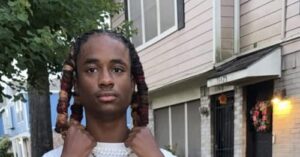
East Harris County, TX – The quiet hum of a Thursday evening in East Harris County was shattered by gunfire, leaving a community in mourning and a family grappling with an unimaginable loss. Authorities have identified the victim of a fatal shooting that took place on the night of February 5, 2026, as 17-year-old Jayden Ford. The incident, which investigators have categorized as a robbery gone wrong, occurred near the 200 block of Uvalde Road, a busy corridor near the Woodforest community. As the Harris County Sheriff’s Office (HCSO) launches a sprawling manhunt for the perpetrators, the death of yet another teenager to gun violence has reignited concerns regarding safety, youth crime, and the prevalence of armed robberies in the Greater Houston area.
The Incident: A Visit Turned Deadly
According to preliminary reports released by the Harris County Sheriff’s Office, the events unfolded late Thursday night within the confines of an apartment complex, a setting that should have been a place of safety and socialization for a young man. Jayden Ford was reportedly visiting other teenagers at the location, engaging in the typical social activities of a 17-year-old, when the atmosphere abruptly shifted from camaraderie to terror.
Investigators detail that a suspect, armed with a pistol, approached the group. The confrontation was not a chance meeting or a dispute gone awry, but rather a calculated predatory act: an attempted robbery. The suspect, whose identity remains unknown, was described as wearing a hoodie and a mask—garb utilized to obscure his features and complicate identification.
During the encounter, the situation escalated with tragic speed. While the specific verbal exchange or the sequence of movements that led to the trigger being pulled remains part of the sensitive, ongoing investigation, the outcome was definitive. The suspect fired the weapon, striking Ford. The severity of the injury was immediately apparent. Despite the likely frantic reaction of witnesses and the subsequent arrival of emergency responders, Jayden Ford was pronounced dead at the scene. In a split second, a robbery attempt had transformed into a capital murder case, ending the life of a young man before he had officially entered adulthood.
The Aftermath and the Flight
Chaos ensued immediately following the gunshot. HCSO detectives reported that the shooter did not act alone, or at the very least, did not flee alone. The suspect was seen running from the scene on foot, accompanied by several other individuals. This detail suggests a group dynamic, raising questions about whether this was a coordinated hit by a group of individuals targeting the teens or an opportunistic crime committed by a roving group looking for victims.
Furthermore, witnesses reported observing a dark-colored vehicle speeding away from the area shortly after the shooting. Investigators are currently working to determine the make and model of this vehicle, as well as its connection to the fleeing foot suspects. Determining whether the vehicle was a getaway car waiting for the shooter or belonged to others fleeing the sound of gunfire is a critical pivot point in the investigation. The coordination implied by a waiting vehicle could suggest premeditation regarding the robbery, if not the murder itself.
The Investigation: Piecing Together the Puzzle
The Harris County Sheriff’s Office Homicide Unit has taken lead on the case, and the investigation is described as “active and fluid.” A crime scene of this nature involves a meticulous, multi-layered approach to gathering evidence.
Throughout the night and into the early hours of Friday morning, crime scene investigators would have canvassed the 200 block of Uvalde Road. Their primary objectives included the recovery of physical evidence—specifically shell casings. Ballistic evidence is crucial in modern policing; casings can be analyzed and run through the National Integrated Ballistic Information Network (NIBIN) to determine if the gun used to kill Jayden Ford has been used in other crimes in the Houston area. This digital fingerprinting of firearms often provides the breakthrough needed to link a specific weapon to a suspect.
Beyond physical evidence, the “digital dragnet” is a vital component of the investigation. Detectives are likely scouring the apartment complex and surrounding businesses for surveillance footage. In an era where doorbell cameras and security systems are ubiquitous, there is a high probability that the suspects—or at least the dark-colored vehicle—were captured on video before or after the crime. Tracking the vehicle’s movements could lead authorities to a license plate number, and subsequently, to the individuals responsible.
However, the most critical element of this investigation is likely human intelligence. Authorities are actively interviewing witnesses, specifically the other teenagers who were present during the shooting. These young witnesses are not only victims of trauma themselves, having watched their friend die, but they also hold the key to identifying the assailants. Their accounts regarding the suspect’s height, build, voice, and mannerisms are vital pieces of the puzzle. Investigators handle these interviews with care, understanding that trauma can impact memory recall, yet knowing that speed is essential before the trail goes cold.
A Community on Edge: The Uvalde Road Corridor
The location of the shooting—Uvalde Road near Woodforest—is a well-trafficked, densely populated section of East Harris County. It is an area characterized by a mix of commercial businesses, apartment complexes, and single-family homes. For residents of this community, the shooting is a stark reminder of the proximity of violence.
When a murder occurs in a residential complex, the ripple effects are felt immediately. Parents become more restrictive, fearing for their own children who might play in the same areas. Neighbors eye unfamiliar cars with suspicion. The sense of sanctuary that one’s home is supposed to provide is eroded. Community leaders often point to incidents like this as a call for increased security measures, such as better lighting in apartment complexes, gated access control, and a more visible law enforcement presence.
The tragedy also highlights the ongoing struggle against violent crime in the unincorporated areas of Harris County. While the Sheriff’s Office patrols these vast regions, the sheer size of the territory can make response times and preventative patrolling a challenge. Incidents like the shooting of Jayden Ford often galvanize local civic clubs and safety forums to demand more resources for their specific precincts.
The Scourge of Youth Violence
Perhaps the most heart-wrenching aspect of this case is the age of the victim. At 17 years old, Jayden Ford was on the precipice of adulthood. Whether he was still in high school, working, or planning for his future, those possibilities were extinguished over a robbery.
This incident contributes to a grim statistic regarding youth violence in America. Adolescents are disproportionately represented both as victims and perpetrators of violent crime. The phenomenon of “peer-on-peer” violence, or violence occurring in settings where teens congregate, is a major focus for criminologists and social workers. When firearms are introduced into these equations—often illegally obtained—disputes or robberies that might have once resulted in a fistfight or a stolen wallet now end in funerals.
The motive—robbery—adds a layer of senselessness to the crime. The items that a 17-year-old might possess (a smartphone, sneakers, a small amount of cash) are of trivial value compared to the cost of a human life. This disparity between the “prize” of the robbery and the lethal force used to obtain it speaks to a terrifying disregard for life among the perpetrators. It suggests a level of desperation or callousness that makes these suspects particularly dangerous to the public at large.
Legal Implications: Capital Murder
Under Texas Penal Code, the suspects involved in this shooting face the most severe charges possible. In Texas, a murder committed during the commission of another felony—such as robbery—is classified as Capital Murder.
This distinction is significant. It means that prosecutors do not need to prove that the suspect went to the apartment complex with the specific intent to kill Jayden Ford. They only need to prove that the suspect intended to commit a robbery and, in the course of that felony, caused the death of an individual. Furthermore, under the Texas “Law of Parties,” the individuals who fled with the shooter—even if they did not pull the trigger—could potentially face the same Capital Murder charges if it can be proven they were active participants in the conspiracy to commit the robbery that led to the death.
This legal reality raises the stakes for the individuals who were seen fleeing the scene. If they were merely bystanders who ran out of fear, they need to come forward immediately to clear their names. If they were accomplices, they are currently complicit in a capital offense that carries a potential sentence of life in prison without parole or, in certain circumstances, the death penalty.
The Search for Answers
As of Friday, February 6, no arrests have been announced. The suspects remain at large, a fact that keeps the community in a state of high alert. The Sheriff’s Office has not released a composite sketch, likely relying on the hoodie and mask description which offers little in terms of facial recognition. This makes the dark-colored vehicle and the testimony of the surviving witnesses the primary leads.
Authorities are urging the public to look for behavioral changes in people they know. Often, after a violent crime, perpetrators will exhibit changes in routine—missing work or school, leaving town unexpectedly, selling a vehicle, or showing unusual interest in news reports about the crime. Family members or acquaintances of the suspects may already suspect who was involved.
A Call to Action: The Role of the Public
Law enforcement cannot solve crimes of this magnitude in a vacuum. The concept of “community policing” relies on the symbiotic relationship between detectives and the citizens they serve. In cases involving teenage victims and teenage suspects, the “code of silence” can often impede justice. Young people may be afraid to speak up due to fear of retaliation or a misguided sense of loyalty.
The Harris County Sheriff’s Office is aggressively soliciting information. They are leveraging Crime Stoppers of Houston to offer a safe harbor for tipsters. The anonymity provided by Crime Stoppers is crucial in breaking the silence. A tipster does not need to testify in court, give their name, or ever meet with a police officer. They simply need to provide the information that leads to an arrest.
Authorities are asking anyone with information to contact:
-
Harris County Sheriff’s Office Homicide Unit: 713-274-9100
-
Crime Stoppers of Houston: 713-222-TIPS (8477)
Tips can be submitted via phone, online, or through the Crime Stoppers mobile app. In many capital murder cases, the cash reward offered for information leading to an arrest can be substantial, often up to $5,000, providing a financial incentive for those who might otherwise remain silent.
Remembering Jayden Ford
While the mechanics of the investigation and the pursuit of justice are paramount, it is essential not to lose sight of the human cost. Jayden Ford was a son, a friend, and a member of the East Harris County community. His death is not just a statistic; it is a permanent void in the lives of those who loved him.
Grief counselors are often deployed to schools and community centers following such events to help peers process the trauma. The psychological impact on the friends who witnessed the murder cannot be overstated; they will carry the memory of that night for the rest of their lives. For the parents of Jayden Ford, the nightmare is just beginning—a journey of grief, court dates, and the agonizing wait for justice.
Vigils and memorials are expected to take place in the coming days as the community rallies around the Ford family. These gatherings serve a dual purpose: they honor the memory of the victim, and they serve as a visual protest against the violence that plagues the streets. They are a plea for peace and a demand that the life of a 17-year-old boy matters.
Conclusion
The killing of Jayden Ford is a senseless tragedy that highlights the fragile nature of life and the devastating consequences of armed robbery. As the sun rose over Harris County on Friday, a family woke up to a reality that no parent should ever have to face. The investigation is moving rapidly, but the suspects are still out there, potentially armed and dangerous.
The resolution of this case depends heavily on the conscience of the community. Someone knows who was in that dark vehicle. Someone knows who returned home Thursday night acting strange, breathless, or terrified. Someone knows who owns the pistol used to take a teenager’s life. The Harris County Sheriff’s Office is waiting for that call, hoping to bring closure to a grieving family and safety back to the residents of Uvalde Road. Until then, East Harris County mourns, waiting for answers in the wake of a life taken far too soon.
Leave a Reply