
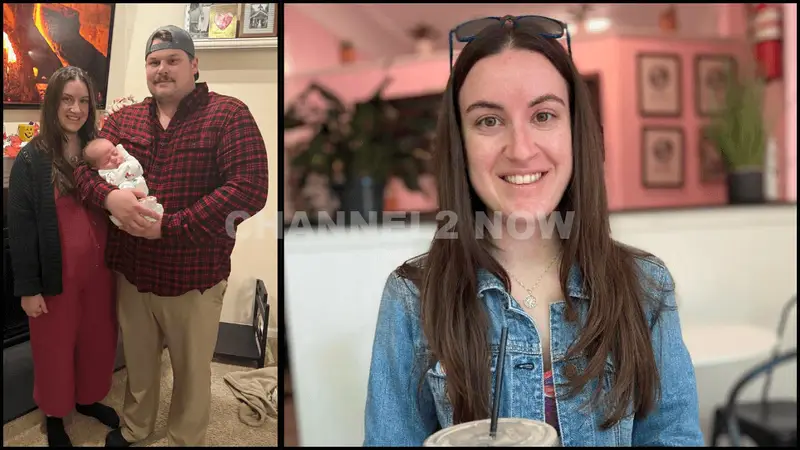
Virginia Beach New Mother Taylor Conard Located Safely After Postpartum Disappearance; Family Thanks Community and Fiancé Michael Olberg.
In a profound relief that has resonated across the Hampton Roads community and beyond, Taylor Conard, the Virginia Beach new mother whose disappearance sparked urgent concern and a widespread search, has been located safely. The emotional resolution to a day of intense fear was confirmed by family spokesperson Caeli Boyle, who detailed that Taylor is now safe, receiving necessary care at a local hospital, and is surrounded by her loving family. This conclusion follows a harrowing hours-long ordeal that highlighted the severe vulnerabilities of postpartum mental health, the power of community mobilization, and the unwavering dedication of a frightened family.
The crisis began on a tense Monday morning in Virginia Beach. Taylor Conard, a new mother to a baby just one month old, vanished under circumstances that immediately triggered alarm bells for her fiancé, Michael Olberg. According to Olberg, Taylor left their home around 11:00 a.m., but her departure was not that of a routine errand. The context painted a picture of a woman under extraordinary and compounding stress. Olberg revealed a critical, distressing detail: the night before Taylor disappeared, the family vehicle had been repossessed. This event, a significant financial and practical blow to any young family, is believed by Olberg to have been a catastrophic trigger, exacerbating what was already a perilously vulnerable period.
“We are very scared for her safety. She just had a baby a month ago, and we are worried about the worst,” Michael Olberg pleaded in his initial public appeal. His words, heavy with dread, framed the disappearance not as a voluntary absence but as a potential medical emergency. The concern was specifically for a severe postpartum mental health crisis, a spectrum of conditions including postpartum depression, anxiety, and the more acute postpartum psychosis, which can alter perception, induce severe despair, and impair judgment. This framing shifted the public perception from a missing persons case to a rescue mission for a medically at-risk individual.
The initial report, disseminated through community networks, social media, and local news, described Taylor as potentially wearing a blue winter jacket with jeans, leggings, or sweatpants. With no known direction of travel or destination, the search was like looking for a needle in a haystack. Yet, the community response was immediate and overwhelming. Michael Olberg’s phone number—757-218-4451—was shared thousands of times across platforms like Facebook, Nextdoor, and Twitter. Virginia Beach residents, parents, and strangers touched by the story kept vigil online, shared tips, and offered support. Local law enforcement, undoubtedly treating the case with heightened urgency given the medical context, coordinated search efforts.
The tension of those hours was palpable. For Michael Olberg, Taylor’s parents, and their extended family, each passing minute was agony. They were trapped in a nightmare scenario, balancing the needs of a newborn while fearing for the life of the child’s mother. The silent phone, the unknown, the terrifying possibilities—all were compounded by the societal stigma and misunderstanding that still surrounds perinatal mental health. Their public appeal was not just a request for eyes; it was an inadvertent cry for society to recognize the very real and dangerous medical conditions that can follow childbirth.
Then came the update that turned despair into overwhelming gratitude. Caeli Boyle, acting as the family’s representative, delivered the news everyone had hoped for: “Taylor has been located safely and is currently receiving care at a local hospital while surrounded by family.” These simple words marked the end of an existential crisis. The specific circumstances of where and how she was found have been respectfully withheld to protect the family’s privacy during this recovery phase, a decision that underscores their focus on her health and well-being over public curiosity.
In the wake of this safe recovery, the family’s primary emotion, beyond profound personal relief, is one of deep, heartfelt communal thanks. “Michael and the entire family extend their heartfelt gratitude to everyone who shared updates, offered support, and helped in the effort to find her,” Boyle stated. “They thank the community deeply for its compassion and assistance.”
This gratitude is a testament to a successful modern community rescue operation. It was a tapestry woven from thousands of individual actions: a person sharing a flyer, another making a call to report a possible sighting, the quiet prayers, the supportive comments holding the family up digitally, and the professional work of first responders and hospital staff. The “Virginia Beach community” cited in their thanks is not an abstraction; it is the collective of individuals who chose to engage, to care, and to act.
The safe location of Taylor Conard is not merely the end of a news story. It is the beginning of a longer, more private journey of healing and support. Postpartum mental health conditions are treatable with professional intervention, therapy, medication, and robust social support. Taylor’s path now moves from the public emergency of a search to the private, critical work of recovery, surrounded by her fiancé Michael Olberg, their new baby, and her family. Her situation shines a stark light on the importance of perinatal mental health screening, the need for accessible support systems for new parents, and the devastating impact of compounding stressors like financial instability on maternal well-being.
Furthermore, this incident serves as a crucial case study in the protocol for missing persons cases involving potential mental health crises. The family’s decision to explicitly state the possibility of a postpartum mental health crisis was instrumental in galvanizing appropriate and urgent concern. It provided context that went beyond a physical description, helping the public understand the why and the potential severity, thereby generating more vigilant and compassionate engagement.
For Michael Olberg, the relief is inextricably mixed with the trauma of the day and a renewed commitment to his fiancée’s health. His early and vocal advocacy for her, his clear articulation of the pressures she faced, and his immediate outreach to the public were decisive factors in the rapid community response. His phone line, once a lifeline for tips, now likely transitions back to a private line for connection with loved ones as the family unit focuses on healing.
The story of Taylor Conard’s disappearance and safe return is a powerful narrative with multiple layers. It is a story about the fragility and strength of new motherhood. It is a story about a community’s capacity for empathy and action in the digital age. It is a story about a family’s love and fear, culminating in gratitude. Most importantly, it is a story that we hope ends with Taylor receiving the comprehensive care she needs and deserves, finding stability and joy in her new role as a mother, supported by her fiancé Michael, their child, and a community that has already proven it will rally for her.
As the family requests privacy moving forward, the public’s role shifts from active search party to respectful well-wisher. The lesson, however, remains: postpartum mental health is a serious medical issue, community vigilance matters, and in moments of crisis, compassion can indeed help bring a loved one home. The Virginia Beach community, and all who followed this story, can now collectively exhale, knowing that Taylor Conard is safe, receiving care, and, most importantly, is loved.
Leave a Reply