
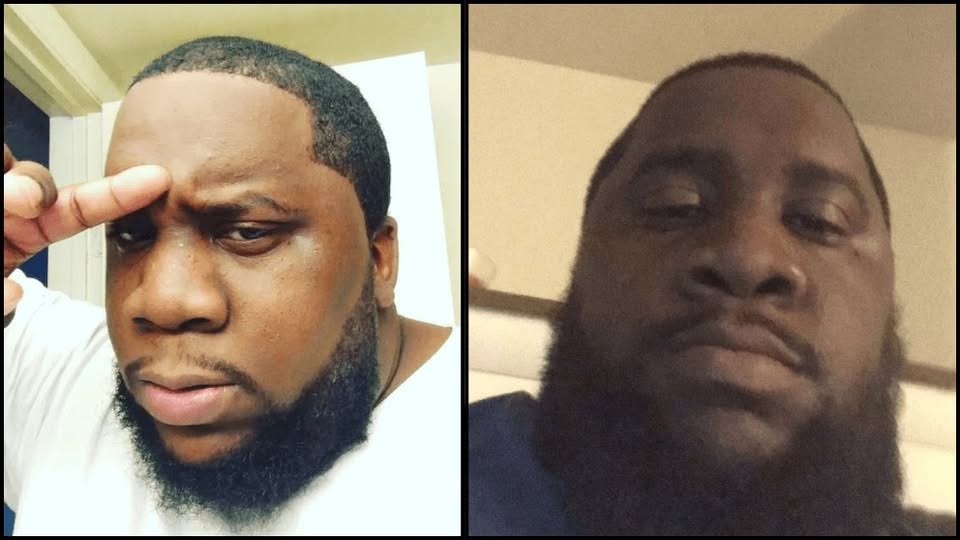
NORFOLK, Va. — The fundamental illusion of absolute safety on an American college campus was violently, ruthlessly obliterated this week by the deafening roar of gunfire and the terrifying reality of domestic terrorism. When the smoke cleared inside Constant Hall at Old Dominion University on Thursday morning, the Norfolk community was left grappling with an unimaginable nightmare: a highly decorated U.S. Army veteran was dead, two others were wounded, and the assailant was a known, convicted ISIS sympathizer.
While the immediate, kinetic threat was neutralized by the astonishing bravery of unarmed students, a massive, urgent question immediately paralyzed federal investigators: How did a convicted terrorist, legally barred from ever possessing a firearm, acquire the weapon used to execute a deadly ambush?
The United States Department of Justice (DOJ) provided the chilling answer on Friday. Federal prosecutors have officially announced severe criminal charges against Kenya Chapman, a Virginia resident who authorities explicitly allege served as the critical, illegal supply chain that armed the shooter.
According to explosive federal court documents and sworn affidavits, Chapman allegedly sold a stolen Glock pistol to the shooter, 36-year-old Mohamed Bailor Jalloh, for just $100. This single, illicit transaction occurring in the shadows directly facilitated a tragedy of national proportions.
As the Federal Bureau of Investigation (FBI) continues to treat the ODU shooting as an official act of terrorism, the arrest of Chapman shifts the focus toward the massive, glaring vulnerabilities within the underground firearms market. This highly expansive, rigorously detailed 2,000-word report delves deep into the harrowing timeline of the illegal gun sale, the highly complex forensic science used to trace the obliterated weapon, the systemic failures that allowed a terrorist to walk free, the unimaginable terror inside Constant Hall, and the profound, heroic legacy of the fallen instructor, Lt. Col. Brandon Shah.
The Black Market Transaction: A Stolen Gun and a Deadly Secret
To fully comprehend the sheer magnitude of the negligence and criminality that precipitated this attack, one must examine the specific mechanics of the illegal transaction that placed a deadly weapon into the hands of a radicalized extremist.
Federal law unequivocally prohibits any individual with a felony conviction—especially a conviction related to international terrorism—from purchasing, owning, or possessing a firearm. To bypass the mandatory, heavily regulated background checks conducted by licensed firearms dealers, prohibited possessors must turn to the black market.
According to the comprehensive federal complaint unsealed on Friday, Kenya Chapman operated within this exact illicit space. During rigorous interviews with federal agents from the Bureau of Alcohol, Tobacco, Firearms and Explosives (ATF), Chapman reportedly confessed to the origin of the weapon. He stated that approximately one year prior to the university attack, he had actively burglarized a parked vehicle in Newport News, Virginia, stealing the handgun from the console or glovebox.
Chapman held onto the stolen firearm until he crossed paths with Mohamed Bailor Jalloh. The two men reportedly met through their mutual employment. In the week leading up to the massacre, digital forensic analysts uncovered multiple phone calls between Chapman and Jalloh, coordinating the illegal transfer.
Chapman told investigators that Jalloh claimed he desperately needed a firearm for “personal protection” while working his routes as a delivery driver. In a stunning admission, Chapman acknowledged to federal agents that he was entirely aware Jalloh had previously spent significant time in federal prison. However, Chapman fiercely denied knowing the specific, terrifying nature of Jalloh’s crimes or that he carried a felony conviction that made the sale a severe federal offense.
For the sum of $100, the stolen Glock changed hands. Chapman reportedly told investigators that he had absolutely no knowledge, expectation, or suspicion that Jalloh intended to walk onto a college campus and carry out a violent, ISIS-inspired execution.
A History of Red Flags: The Straw Purchase Warning
The arrest of Kenya Chapman has generated massive, entirely justified public outrage, particularly after federal authorities revealed that this was not his first encounter with federal firearms investigators.
According to the DOJ affidavit, the ATF had previously investigated Chapman in 2021 for his involvement in “straw purchasing” schemes. A straw purchase is a highly illegal, highly dangerous transaction where an individual with a clean background check purchases a firearm with the direct, explicit intent to secretly transfer that weapon to someone who is legally prohibited from buying it themselves. It is the primary mechanism fueling the criminal underworld’s armory.
Chapman allegedly admitted to executing straw purchases for three separate firearms in 2021. However, in a move that is now under intense national scrutiny, the U.S. Attorney’s Office at the time declined to formally prosecute him. Instead, Chapman was issued a formal “straw purchaser warning letter” and allowed to write a letter of apology.
Five years later, his continued involvement in the illegal flow of firearms has resulted in the death of a decorated American veteran. U.S. Deputy Attorney General Todd Blanche addressed the severity of the situation in a stark public statement: “Chapman allegedly stole a firearm and illegally sold it to a convicted terrorist, who murdered a decorated American veteran, and he will finally face the full weight of justice.”
The Ghost Gun: Obliterated Serial Numbers and Forensic Metallurgy
When local police and federal agents secured the blood-stained classroom in Constant Hall, they recovered the murder weapon. However, tracing the gun back to Chapman was not a simple, straightforward process.
A law enforcement official, speaking under the condition of anonymity, revealed to reporters that the handgun utilized by Jalloh had a partially obliterated serial number. Criminals frequently utilize metal files, grinders, or drills to aggressively scrape away the deeply stamped serial numbers on the frame or slide of a stolen firearm, operating under the assumption that an untraceable weapon provides them with absolute anonymity.
They are frequently wrong.
The ATF deployed elite forensic specialists to their national laboratory to execute highly complex, scientific recovery techniques. When a serial number is stamped into steel or polymer at the factory, the massive pressure permanently alters the crystalline structure of the metal deep beneath the visible surface. Forensic metallurgists utilize highly specialized, caustic acid-etching techniques and magnetic particle inspections. By applying chemical compounds to the scratched surface, the acid eats away at the surrounding metal at a different rate than the compressed metal beneath the original stamp, miraculously causing the “ghost” of the obliterated numbers to temporarily reappear.
This advanced forensic science allowed investigators to identify the exact make, model, and origin of the stolen weapon, corroborating Chapman’s confession and solidifying the federal indictment against him.
The Terror in Constant Hall: “God is Greatest”
The sheer, calculating coldness of the attack on Thursday morning has left the Old Dominion University community profoundly traumatized. This was not a random, chaotic act of mass violence; it was a highly targeted, ideologically driven assassination.
At approximately 10:48 a.m., an emergency alert was pushed to every single digital device on the Norfolk campus, warning of an active threat inside Constant Hall, the building housing the university’s College of Business.
According to multiple law enforcement sources and terrifying eyewitness accounts, Mohamed Bailor Jalloh entered the building and specifically navigated the corridors until he located his target. He walked into a classroom and calmly, chillingly asked the occupants to explicitly confirm that the session was an active Army Reserve Officers’ Training Corps (ROTC) class.
When a student confirmed the nature of the gathering, Jalloh’s demeanor instantly shifted.
Authorities confirm that Jalloh loudly shouted “Allahu akbar”—an Arabic phrase translating to “God is greatest,” frequently co-opted by radicalized extremists during acts of terror—and immediately opened fire. His primary target was the instructor standing at the front of the room. The deafening, concussive blasts of the handgun echoed through the academic halls, plunging the entire university into a state of absolute, paralyzing panic.
The Ultimate Sacrifice: Remembering Lt. Col. Brandon Shah
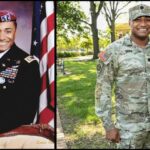
The instructor who absorbed the devastating, lethal impact of the ambush was 42-year-old Lieutenant Colonel Brandon Shah, a resident of Chesapeake, Virginia.
While the sterile police reports simply list him as the deceased victim, the reality is that the United States lost a true, highly decorated titan of military service. Lt. Col. Shah was a man who had dedicated his entire adult life to the defense of the nation.
Shah enlisted in the U.S. Army in 2003, eventually graduating from Old Dominion University and commissioning as an officer. He became an elite, highly skilled Aviation Operations Specialist, piloting the fearsome Apache attack helicopter. He logged hundreds of hours of highly dangerous, kinetic combat flight time during grueling deployments to Iraq, Afghanistan, and Eastern Europe. His incredible heroism under fire earned him a massive array of military decorations, including the prestigious Air Medal with Valor and two Bronze Stars.
After surviving the absolute worst, most terrifying combat zones on the planet, Shah retired from active duty and returned home. In 2022, he returned to his alma mater, Old Dominion University, to serve as a Professor of Military Science and the Department Chair for the Monarch Battalion. His mission was to mentor, train, and mold the next generation of commissioned Army officers.
To survive the skies over Afghanistan only to be brutally gunned down by a terrorist inside a college classroom in Virginia is an irony so incredibly dark and devastating that it defies basic human comprehension.
Old Dominion University President Brian Hemphill described the massive void left by the tragedy. “Above all else, Lt. Col. Shah embodied what it means to be a devoted family man, a revered leader, and a heroic protector even in his final moments.” Shah leaves behind a grieving spouse and a child whose lives have been permanently, violently altered.
The Unarmed Heroes: ROTC Cadets Fight Back
In the immediate, terrifying seconds following the fatal shots that struck Lt. Col. Shah and wounded two other individuals in the room, the situation threatened to spiral into a massive, multi-casualty massacre. The shooter was armed, ideologically motivated, and stood in a room full of trapped students.
However, Jalloh severely miscalculated the specific caliber of the individuals he chose to target. He did not walk into a room of defenseless civilians; he walked into a room filled with highly trained, fiercely disciplined United States military cadets.
According to officials with the Federal Bureau of Investigation, the ROTC students did not cower or freeze. They instantly, instinctually reverted to their tactical training. Multiple students bravely rushed the armed attacker, completely disregarding their own personal safety.
A fierce, brutal hand-to-hand combat struggle ensued. The students successfully disarmed Jalloh and physically subdued him with extreme prejudice. FBI officials explicitly confirmed that the students’ actions were entirely instrumental in stopping the violence and saving countless lives. While the authorities have not publicly detailed the exact physical mechanics of the struggle, they officially confirmed a stunning conclusion to the event: the shooter, Mohamed Bailor Jalloh, was killed during the physical altercation with the students. He was not shot; he was neutralized through sheer, overwhelming physical force.
These young men and women, training to be the future leaders of the military, proved their absolute valor before they even pinned on their lieutenant bars.
A Systemic Failure: The Early Release of a Terrorist
While the campus mourns the loss of a hero, a massive, furious political and legal firestorm is rapidly escalating regarding the shooter’s background. How was an individual like Mohamed Bailor Jalloh walking the streets of Norfolk in the first place?
Jalloh, a naturalized U.S. citizen originally from Sierra Leone, previously served as a specialist in the Virginia Army National Guard. However, he became deeply, irrevocably radicalized. In 2016, he pleaded guilty to severe federal charges related to attempting to provide material support and assistance to the Islamic State (ISIS) extremist group. Prosecutors at the time revealed he had actively contemplated conducting an attack similar to the devastating 2009 Fort Hood massacre.
In 2017, a federal judge sentenced Jalloh to 11 years in federal prison.
However, according to officials highly familiar with the case, Jalloh did not serve his full sentence. He was released from federal custody in December 2024, approximately two and a half years early, and placed on supervised release. Sources indicate he was granted this massive sentence reduction after completing a federal drug treatment program.
The revelation that an individual explicitly convicted of international terrorism-related offenses was somehow deemed eligible for an early-release drug program has sparked absolute, blistering outrage. Inmates serving sentences for terror ties are typically strictly barred from such sentence-reducing credits. The Federal Bureau of Prisons is currently facing immense, intense pressure to publicly explain the specific administrative loopholes that allowed a radicalized extremist to walk out of the prison gates early, directly paving the way for the tragedy at ODU.
Conclusion: A Long Road to Healing and Justice
For now, Kenya Chapman remains locked securely within the federal detention system. He is officially charged with making a false statement during a firearm purchase and engaging in the business of firearms dealing without a license. However, as the DOJ continues to investigate his exact level of complicity and the timeline of the transaction, additional, far more severe charges remain a distinct possibility.
As the heavily armed FBI Joint Terrorism Task Force completely locks down the forensic aspects of the case, the Old Dominion University campus is left to navigate a profound, suffocating landscape of grief.
On Friday afternoon, students, faculty, and heartbroken veterans gathered near the flagpoles across from Constant Hall to honor the memory of Lt. Col. Shah. Eddie Flack, a close friend and former classmate, stood before the memorial and poured out a bottle of whiskey in a silent, deeply emotional tribute to a fallen brother-in-arms.
The physical yellow police tape will eventually be removed from the business school, and the academic calendar will force the university to move forward. But the invisible, permanent scars of this terror attack will linger over Norfolk for generations.
The absolute tragedy of this case is defined by its preventability. A stolen gun, a slapped-wrist straw purchaser, and a bureaucratic prison release program completely converged to arm a terrorist. As the federal prosecutors prepare to bring the full, crushing weight of the United States justice system down upon Kenya Chapman, the enduring, desperate hope is that the heroic sacrifice of Lt. Col. Brandon Shah—and the unbelievable bravery of his cadets—will serve as the ultimate catalyst for systemic reform, ensuring that the black market pipelines arming extremists are permanently, violently severed.
Leave a Reply