
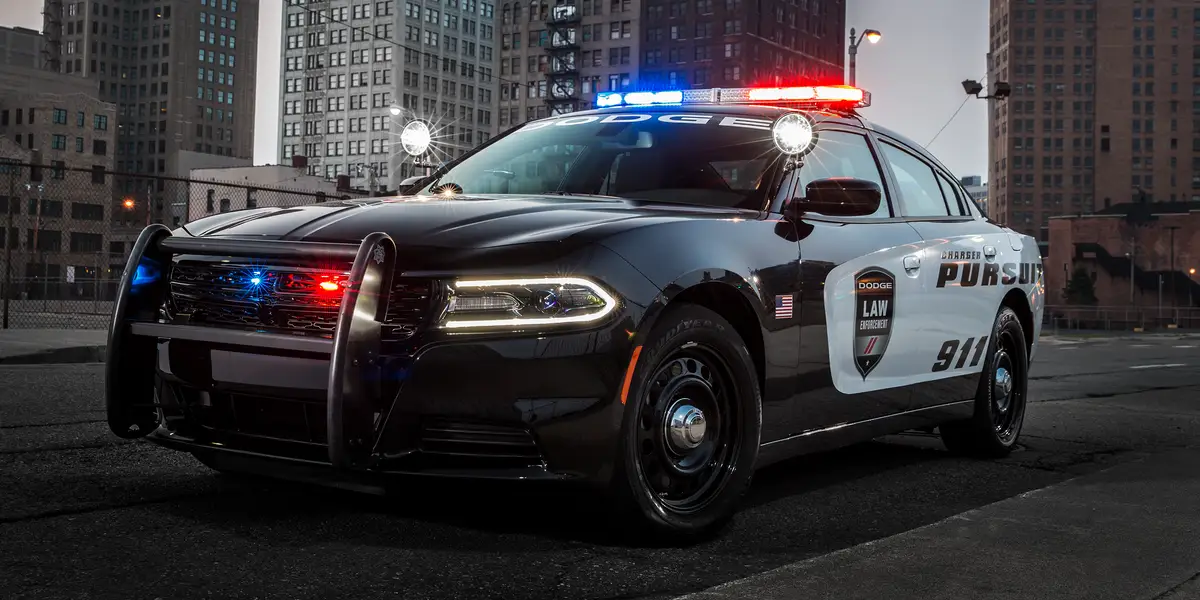
Santa Barbara Police Department Investigates Fatal Pedestrian Crash on West Anapamu Street:Ventura Resident Teresa Garcia, 67, Struck and Killed.
The golden-hour light of a Friday evening in Santa Barbara, typically a time of transition from workday bustle to weekend repose, was fractured by sudden tragedy on February 6th. In an incident that has cast a pall over two coastal communities, 67-year-old Teresa Garcia of Ventura died after being struck by a vehicle while attempting to access her parked car along the 100 block of West Anapamu Street.
The Santa Barbara Police Department (SBPD) confirmed the collision occurred at approximately 5:20 p.m., a time of heightened pedestrian and vehicular activity. Despite rapid lifesaving efforts at the scene and subsequent emergency care at Cottage Hospital, Garcia succumbed to her injuries. This profound loss, stemming from a moment of mundane routine, has ignited a wave of community grief and prompted a rigorous investigation by the SBPD’s Traffic Enforcement Unit, raising urgent questions about urban safety, driver-pedestrian dynamics, and the fragile boundaries of everyday life.
The Scene: A Routine Errand Turns Catastrophic
West Anapamu Street, a central artery running through Santa Barbara’s downtown-adjacent grid, is a corridor of constant movement. Lined with a mix of residential apartments, civic buildings, small businesses, and street parking, it epitomizes the city’s blend of historic charm and daily utility. At 5:20 p.m. on that Friday, the street would have been alive with the rhythms of a city winding down: commuters heading home, residents running final errands, and the softening light casting long shadows—a condition known to challenge driver visibility.
According to preliminary information from the SBPD, Teresa Garcia was in the process of entering her own parked vehicle when the collision occurred. This specific, heartbreaking detail—that she was steps from the perceived safety of her car—adds a layer of cruel irony to the tragedy. The exact mechanics of the incident are under investigation, but such scenarios often involve a driver failing to see a pedestrian stepping out from between parked cars, a notoriously dangerous blind spot known as a “pedestrian surprise.” The vehicle, which has not been publicly described in detail by police, struck Garcia, inflicting serious, life-threatening injuries.
Emergency Response: A Race Against Time
The response was immediate. Calls to 911 from witnesses and possibly the driver brought Santa Barbara Police patrol units, Santa Barbara City Fire Department engines, and American Medical Response (AMR) paramedics racing to the 100 block of West Anapamu. First responders arrived to find a critical patient. Firefighter/paramedics, trained in both trauma care and extrication, worked swiftly to stabilize Garcia at the curb-side. They performed advanced interventions to manage her injuries, which in pedestrian-versus-vehicle collisions often involve severe trauma to the head, torso, and lower extremities.
Once stabilized for transport, she was loaded into an ambulance and rushed to Cottage Hospital’s emergency department, one of the Central Coast’s leading trauma-receiving centers.
The hospital’s trauma team, pre-alerted by first responders, would have been standing by, ready to continue the fight for her life in a controlled, surgical environment. Despite this continuum of expert care—from street to hospital—the injuries proved too severe. The Santa Barbara Police Department, in coordination with the hospital and the Garcia family, later confirmed that Teresa Garcia had died from her injuries. Her death transforms the incident from a traffic collision to a fatal crash investigation, invoking a higher level of procedural scrutiny.
The Investigation: Scrutinizing the Space Between Parked Cars
In the aftermath, the SBPD’s Traffic Enforcement Unit took command of the scene. Recognizing the need for both evidence preservation and public safety, officers made the decision to close portions of West Anapamu Street for several hours. This closure, while disruptive to Friday evening traffic, was non-negotiable. It allowed investigators to work in a secure environment, free from the dangers of moving vehicles, to collect every possible fragment of evidence.
The investigation is a multi-faceted forensic puzzle. Key elements include:
· Scene Documentation and Reconstruction: Investigators used laser mapping and drone photography to create a precise, three-dimensional model of the crash site. They documented the final resting position of Garcia, the point of impact (often indicated by debris scatters and fluid stains), and the length and character of any pre-impact skid marks, which can indicate braking effort and speed. The positioning of the parked car Garcia was approaching is also a critical datum point.
· Vehicle Forensics: The involved vehicle was impounded for a detailed mechanical inspection. Investigators will examine it for damage consistent with a pedestrian impact—dents on the hood or fender, broken headlight glass, and impressions on the bumper. Crucially, they will also download data from the vehicle’s Event Data Recorder (EDR), or “black box.” This device can provide objective data on the vehicle’s speed in the five seconds before impact, whether the brakes were applied, and the steering angle. This data is invaluable for confirming or contesting driver and witness statements.
· Witness Interviews: Detectives are seeking every possible witness—other drivers, cyclists, residents from nearby apartments, and employees of local businesses.
They are looking for accounts of Garcia’s actions prior to stepping into the roadway, the vehicle’s speed and path, and the immediate aftermath. The goal is to triangulate a single, factual narrative from multiple perspectives.
· Driver Cooperation and Toxicology: The SBPD has confirmed a few critical facts that shape the early direction of the inquiry. The driver remained at the scene and is fully cooperating with investigators. Furthermore, an on-site evaluation determined that alcohol was not a factor in the crash. This rules out one of the most common contributors to fatal collisions but opens a broader field of other potential causes, including driver distraction, inattention, obscured sightlines due to parked vehicles, or environmental factors like sun glare at that precise hour.
The Human Loss: A Life Remembered in Ventura and Santa Barbara
As the forensic process unfolds, the human toll remains immeasurable. Teresa Garcia was a 67-year-old woman from Ventura, a neighboring city whose community is now intimately connected to Santa Barbara through shared grief. The news of her death, particularly in such a sudden and violent manner, has sent shockwaves through her circle of family and friends. She was not a statistic; she was a grandmother, a mother, a sister, a friend, a neighbor. She was someone who had driven to Santa Barbara, perhaps for an appointment, to visit someone, or to shop, engaging in the ordinary cross-county mobility that defines life in Southern California.
The specific circumstance—being struck while accessing her own car—resonates deeply because it is an action every driver and pedestrian performs countless times. It underscores a terrifying vulnerability; the simple act of walking from the sidewalk to a car door, a space of maybe ten feet, can become a fatal gauntlet. This has sparked a visceral reaction in the community, prompting residents to re-examine their own habits and the safety of their own streets.
Urban Design and the “Last Foot” Problem: A Call for Systemic Review
The tragedy on West Anapamu Street highlights a persistent and deadly flaw in urban street design, often called the “last mile” or, more aptly in this case, the “last foot” problem. Our transportation networks are designed for the efficient movement of vehicles, often to the detriment of the pedestrian’s final steps between a destination and their parked car or a transit stop.
The 100 block of West Anapamu likely features standard parallel or angled parking directly adjacent to a traffic lane. This design creates a series of high-risk conflicts:
· Visual Obstruction: Parked cars, especially larger SUVs and trucks, create a solid wall that completely blocks the sightlines of both drivers on the road and pedestrians on the sidewalk. Neither can see the other until they are both in the conflict zone.
· The “Pedestrian Surprise”: A pedestrian stepping out from between two parked cars can appear in a driver’s path with virtually zero reaction time. At even 25 miles per hour, a vehicle travels over 36 feet per second.
· Driver Expectation: Drivers on through lanes are conditioned to watch for moving vehicles and signals, not for pedestrians who may emerge from between static objects at the curb.
In the wake of this fatality, transportation safety advocates and concerned citizens are likely to call for a formal review of this and similar corridors. Proven countermeasures exist and may be considered:
· Daylighting: Mandating no-parking zones for 20-30 feet before intersections and mid-block crosswalks (if present) to clear sightlines.
· Parked Car Setbacks: Designing parking lanes with a slight setback or a painted buffer zone between parked cars and the travel lane, giving both pedestrians and drivers a crucial extra moment of visibility.
· Pedestrian Safety Islands: For wider streets, creating small, curb-protected refuges in the middle of the street where pedestrians can pause after crossing one lane before proceeding.
· Speed Management: Implementing traffic-calming measures like road diets (reducing travel lanes), adding speed humps, or lowering the posted speed limit to 20 mph in high-pedestrian areas, as speed is the ultimate determinant of crash survival.
A Community’s Path Forward: Mourning, Investigation, and Prevention
The Santa Barbara Police Department’s investigation will proceed methodically. Its conclusions will determine if any citations are warranted or if the case will be classified as a tragic accident. A report will be filed with the Santa Barbara County District Attorney’s Office for review.
For the family of Teresa Garcia, the path is one of unimaginable grief, compounded by the complex logistics that follow an unexpected death. For the communities of Ventura and Santa Barbara, her passing is a somber invitation to reflect.
The most enduring tribute to Teresa Garcia’s memory may be a community-wide recommitment to creating streets where no one faces mortal danger while performing a task as simple as getting into their car. It calls for drivers to practice hyper-vigilance in areas with parked cars, to slow down, and to consciously scan the gaps between vehicles.
It calls for pedestrians to make eye contact with drivers whenever possible, to pause at the curb edge, and to never assume they are seen. And ultimately, it calls for city planners and engineers to redesign our public right-of-ways to prioritize human life over parking convenience or traffic speed. In that holistic effort—of mindful driving, defensive walking, and intentional street design—lies the hope of preventing the next heartbreaking headline, and of honoring a life lost in a space that should be safe for all.
Leave a Reply